



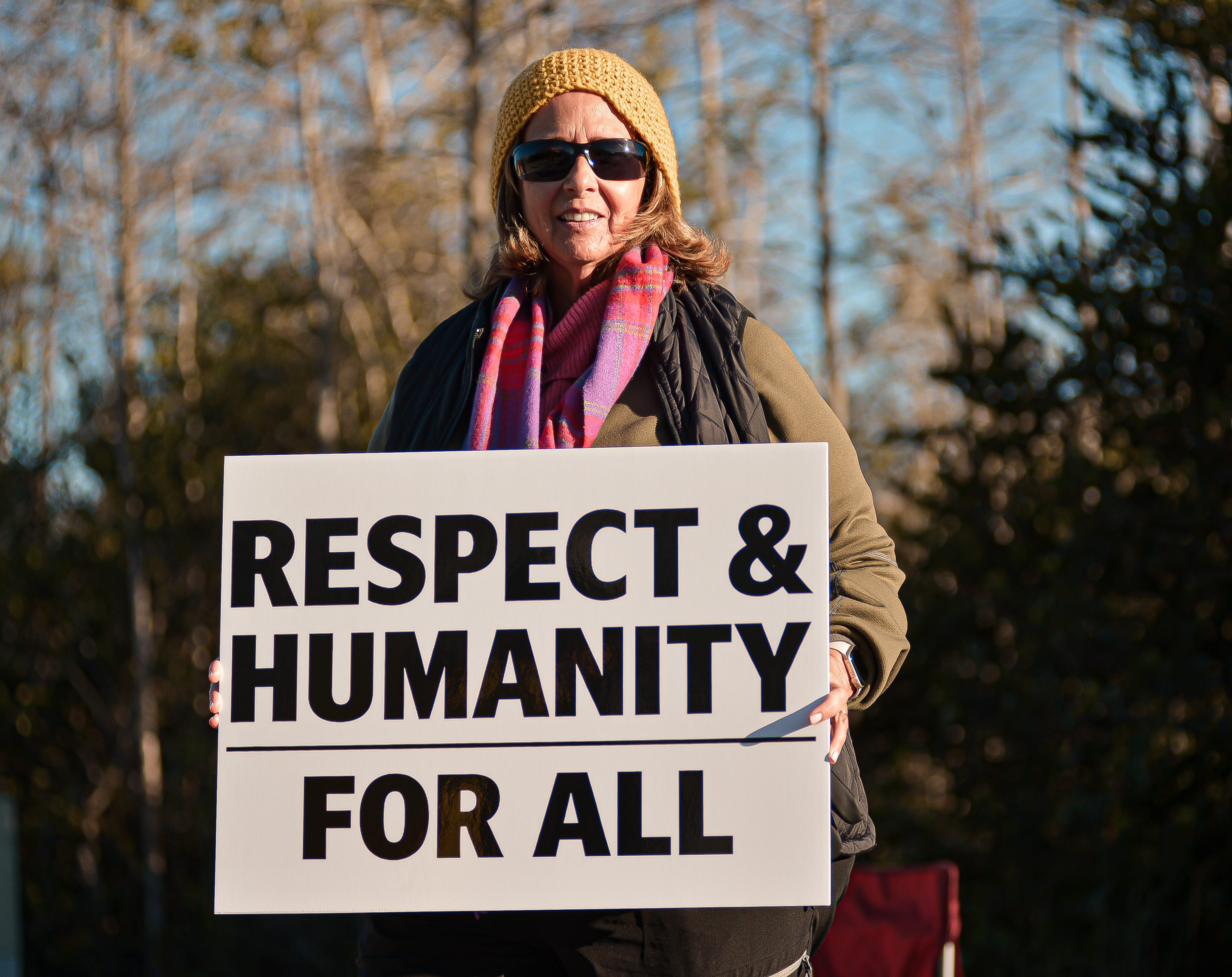
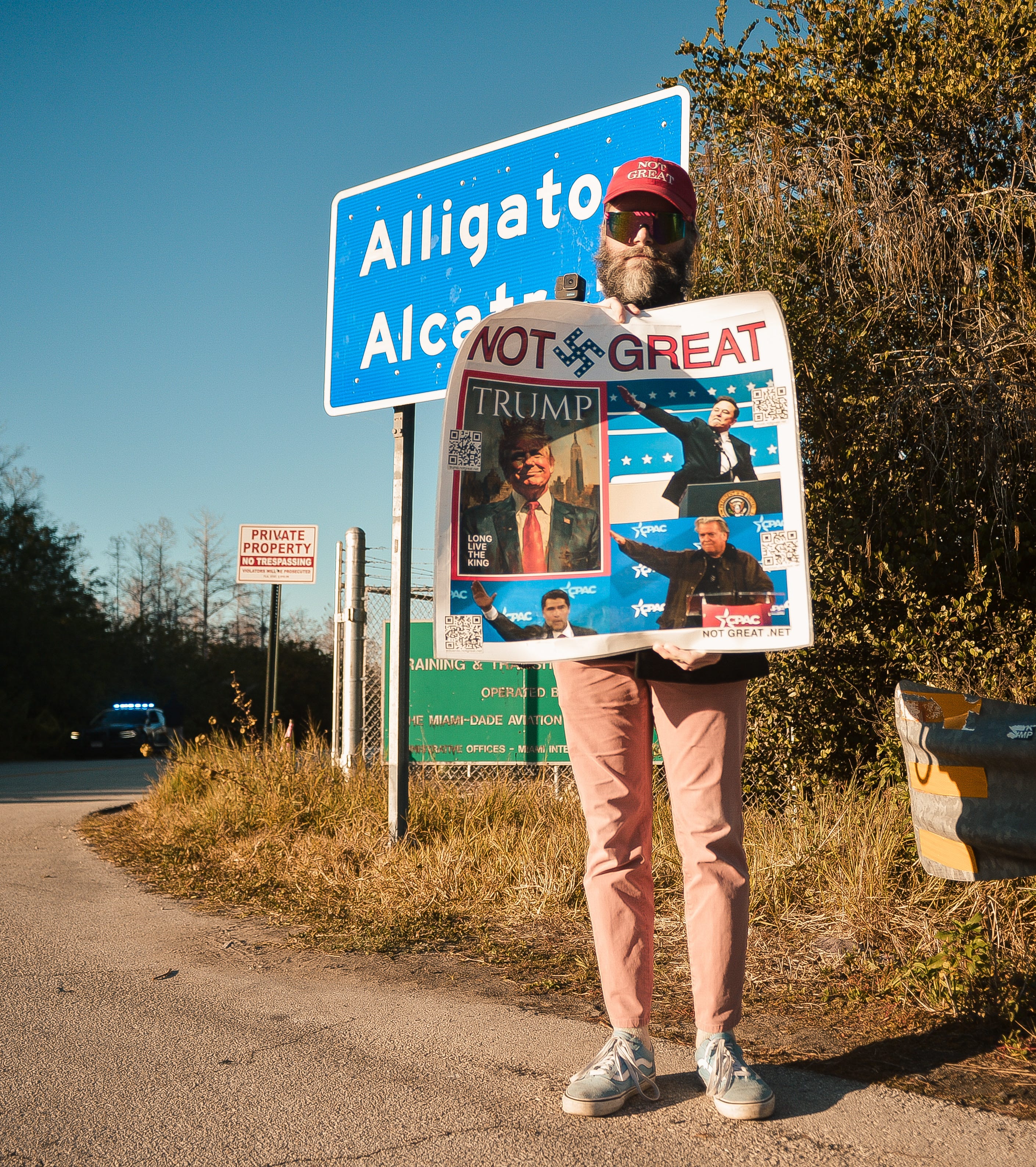
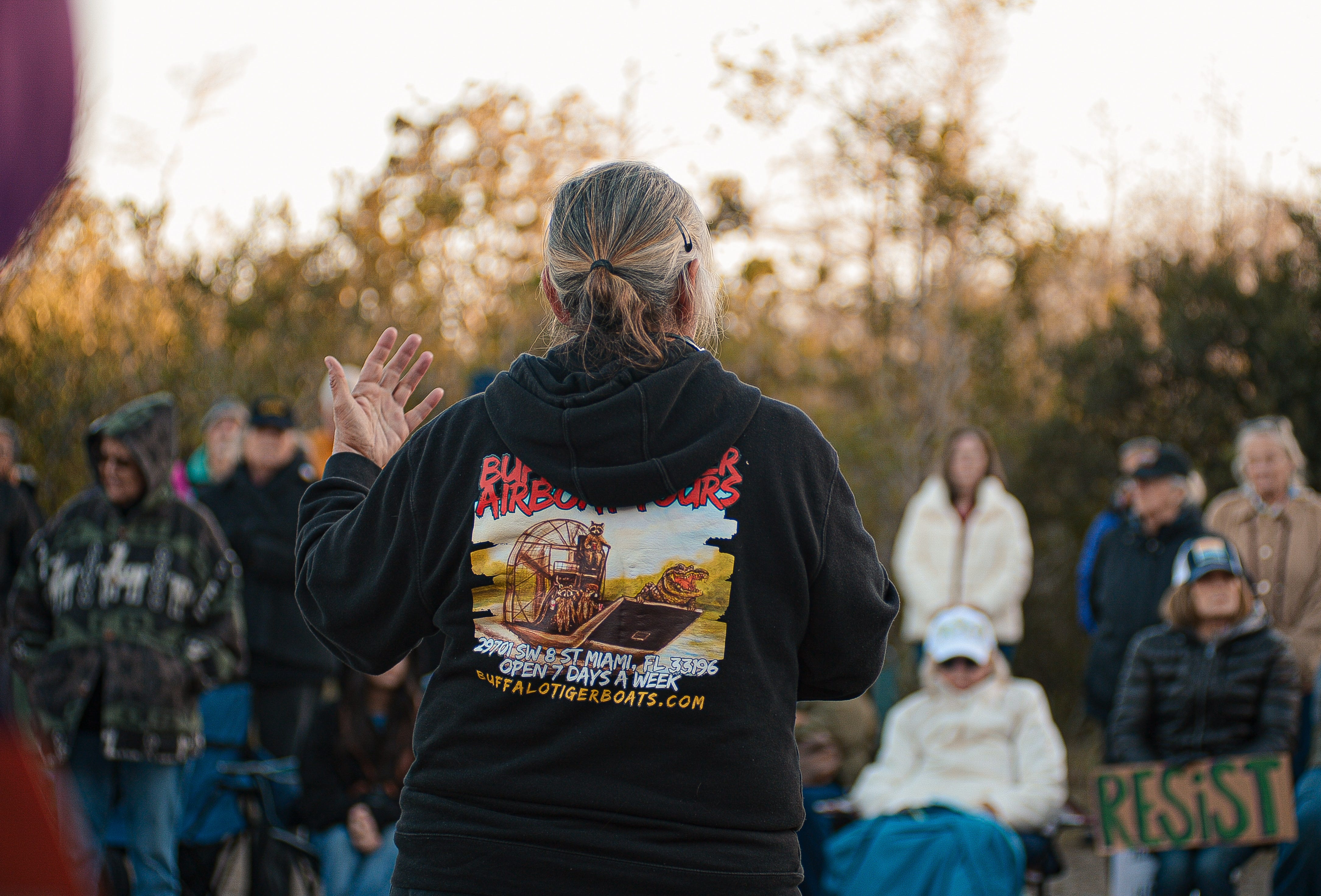
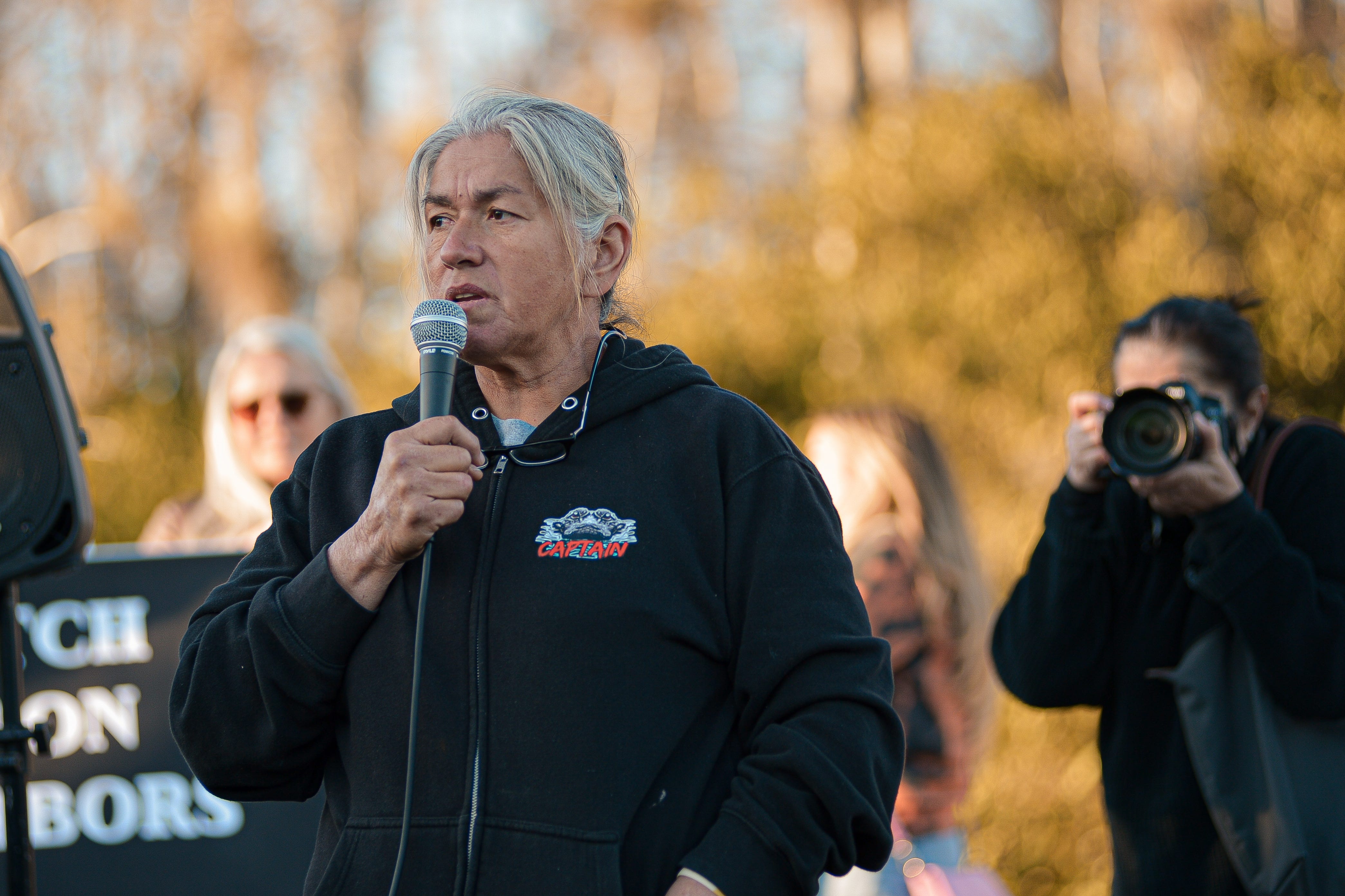
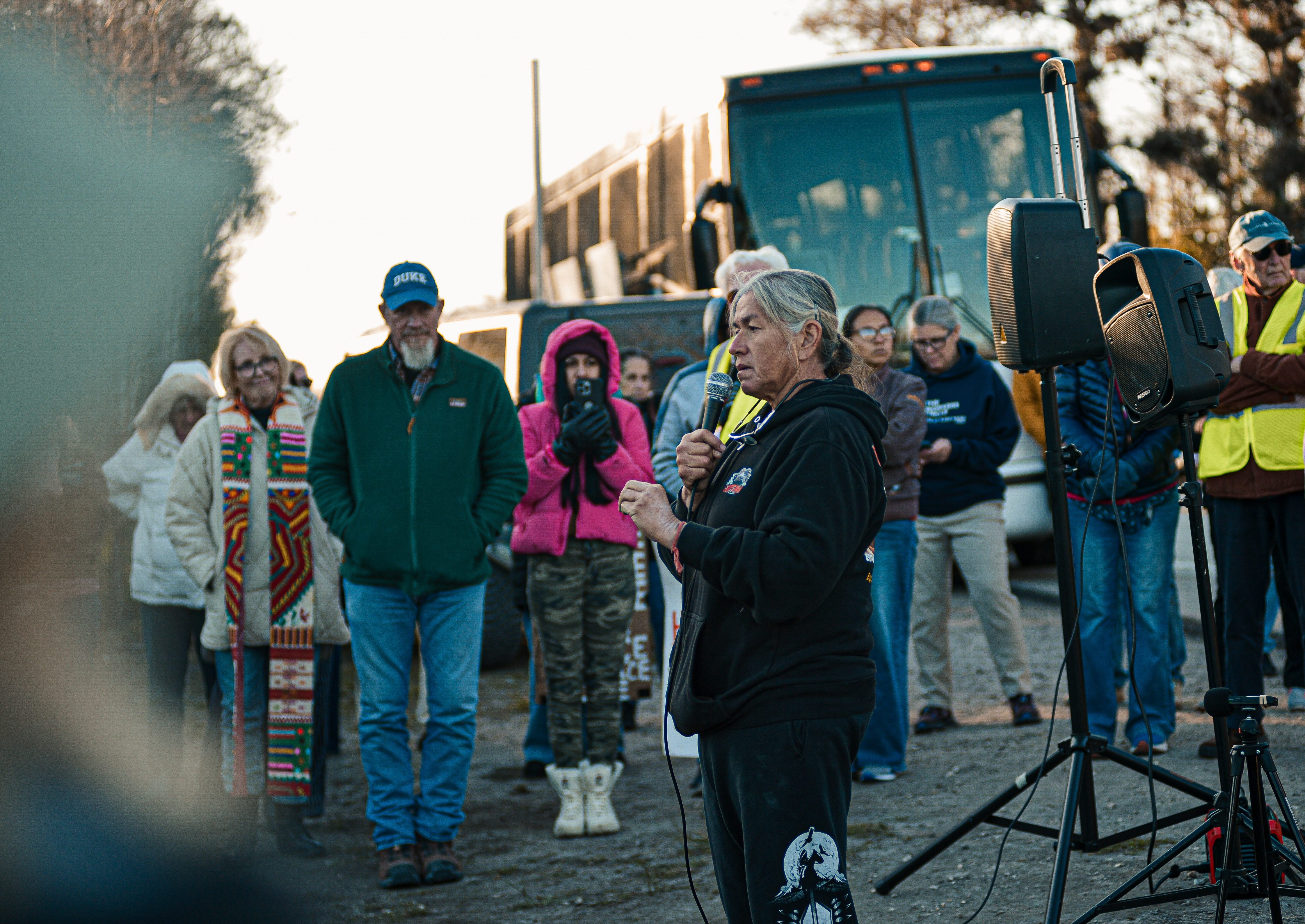
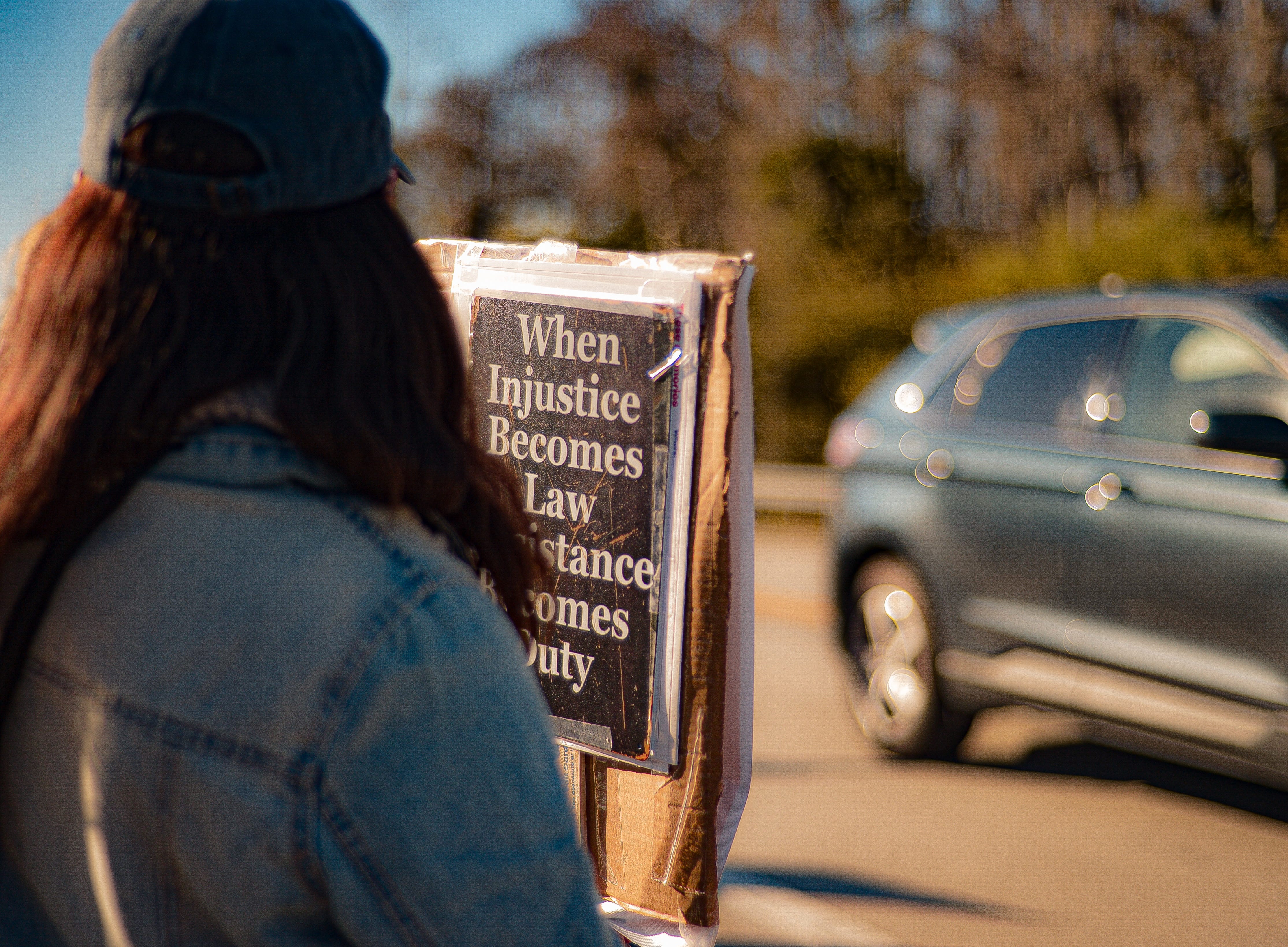
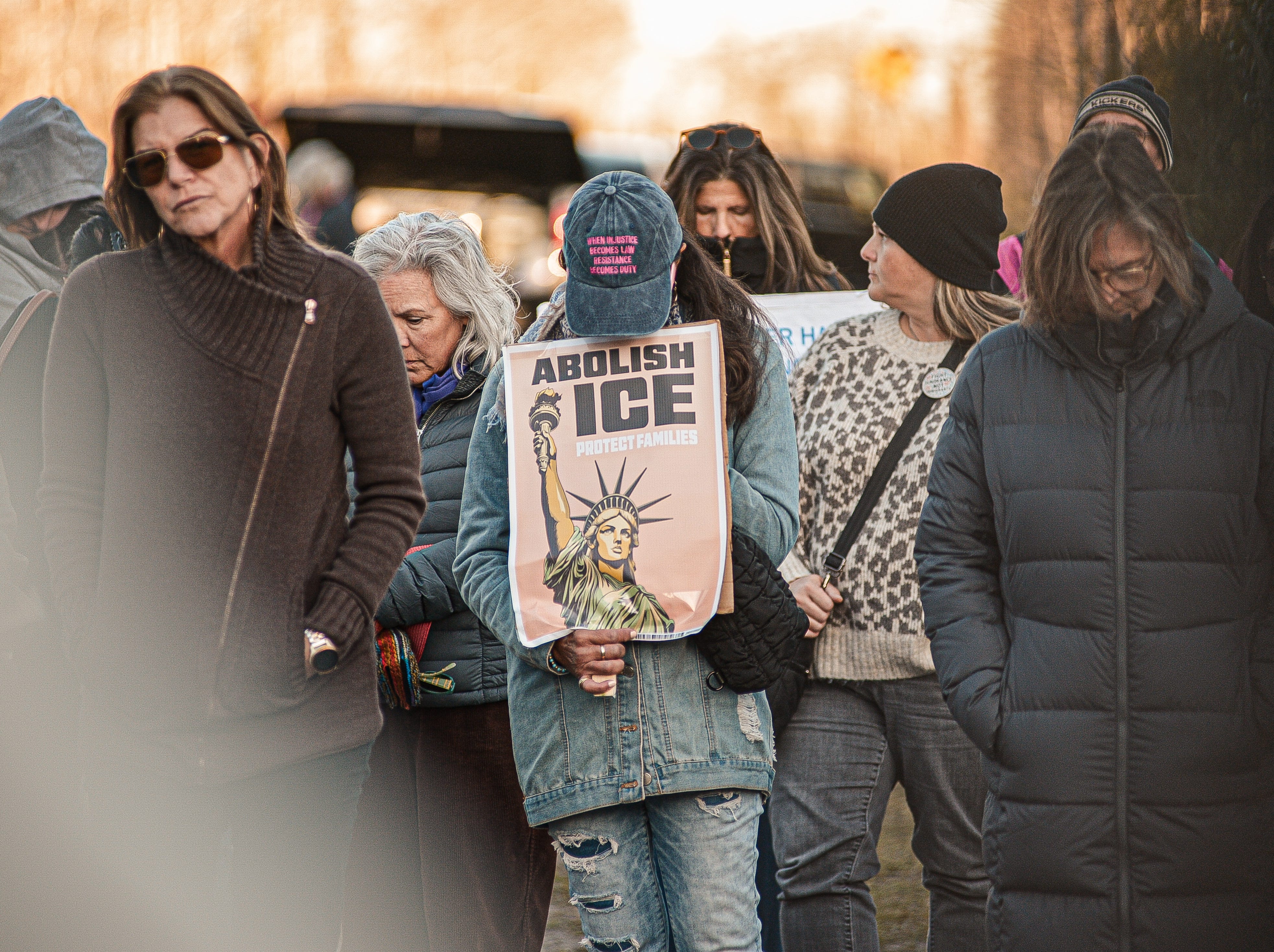
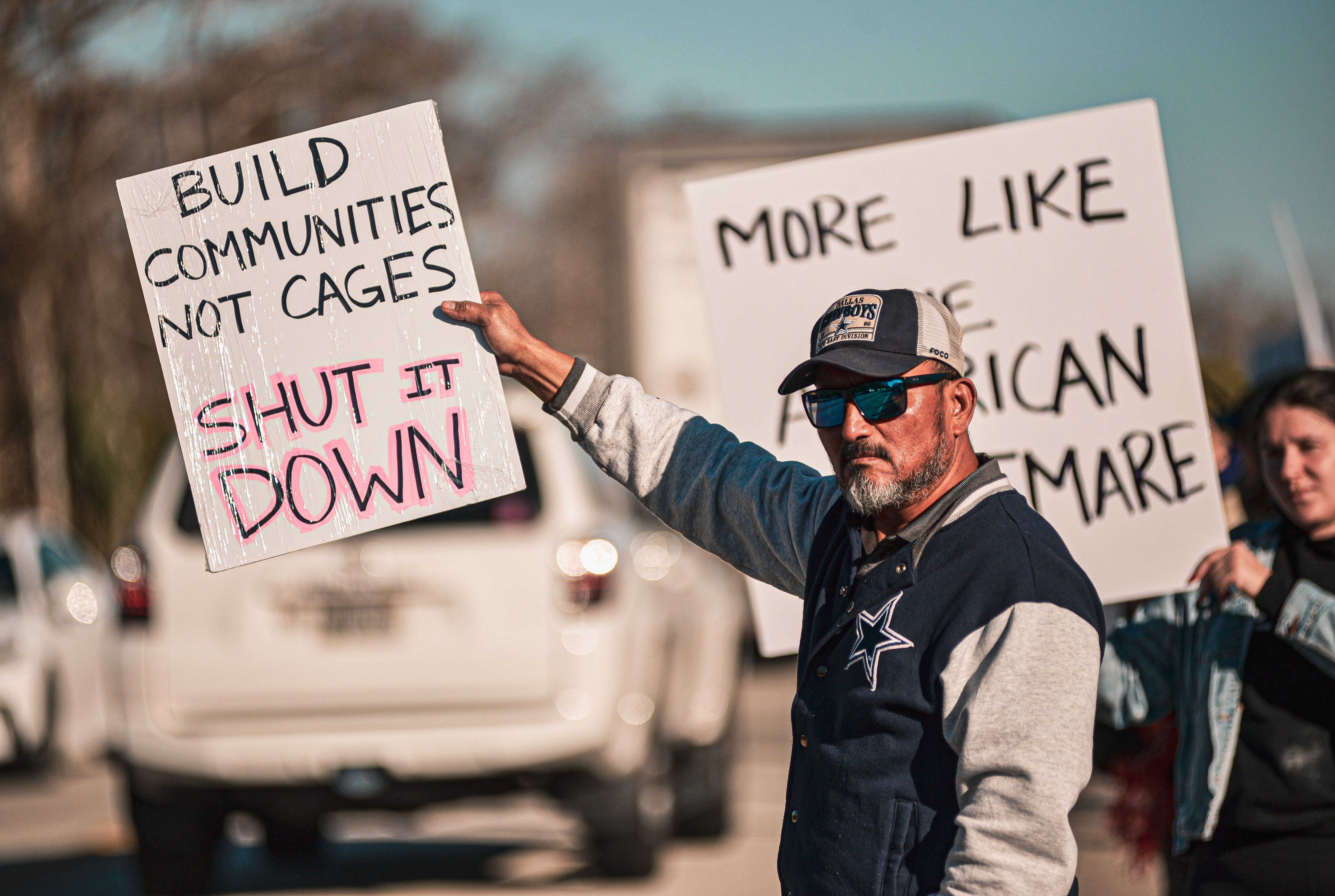
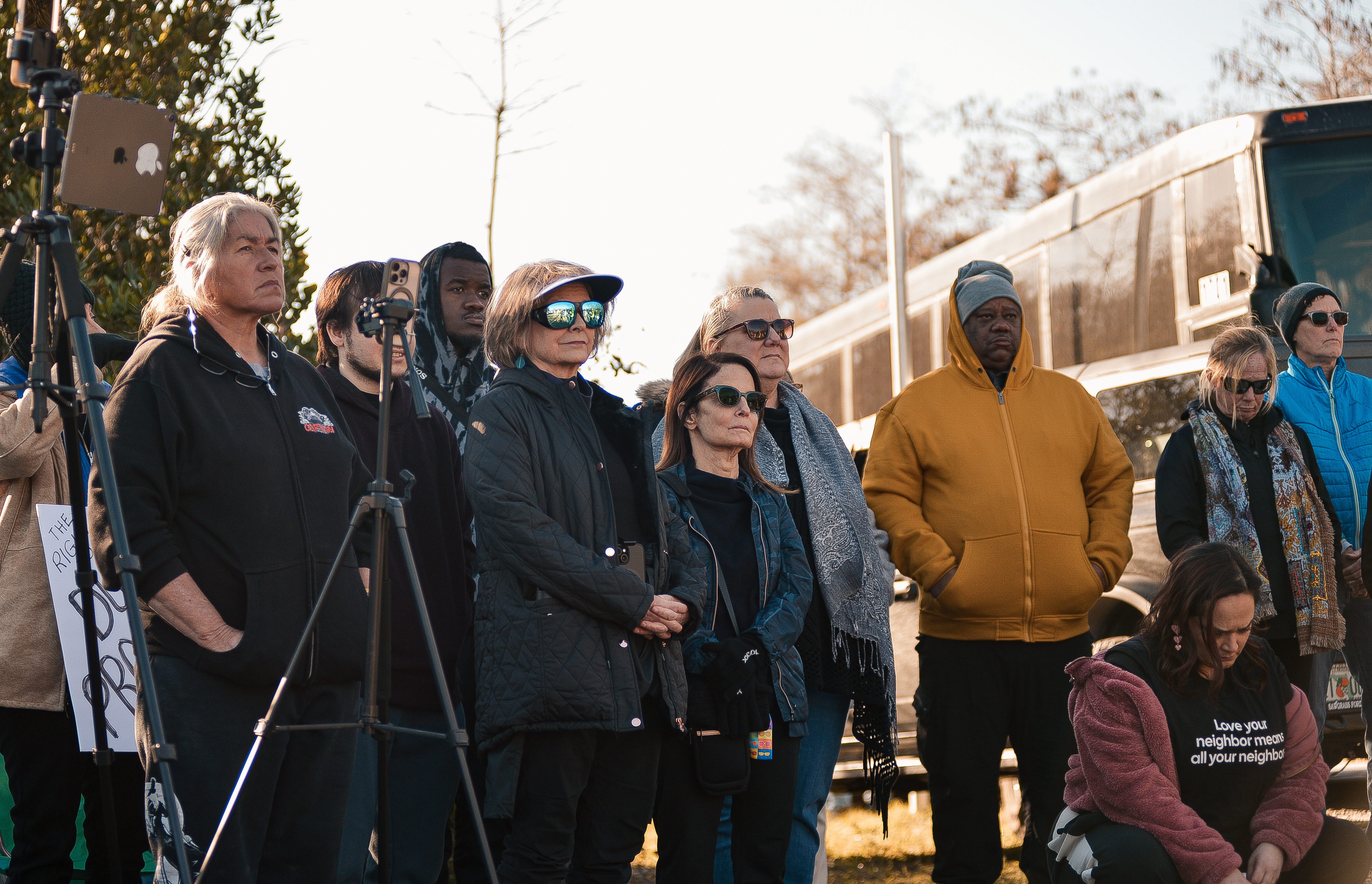
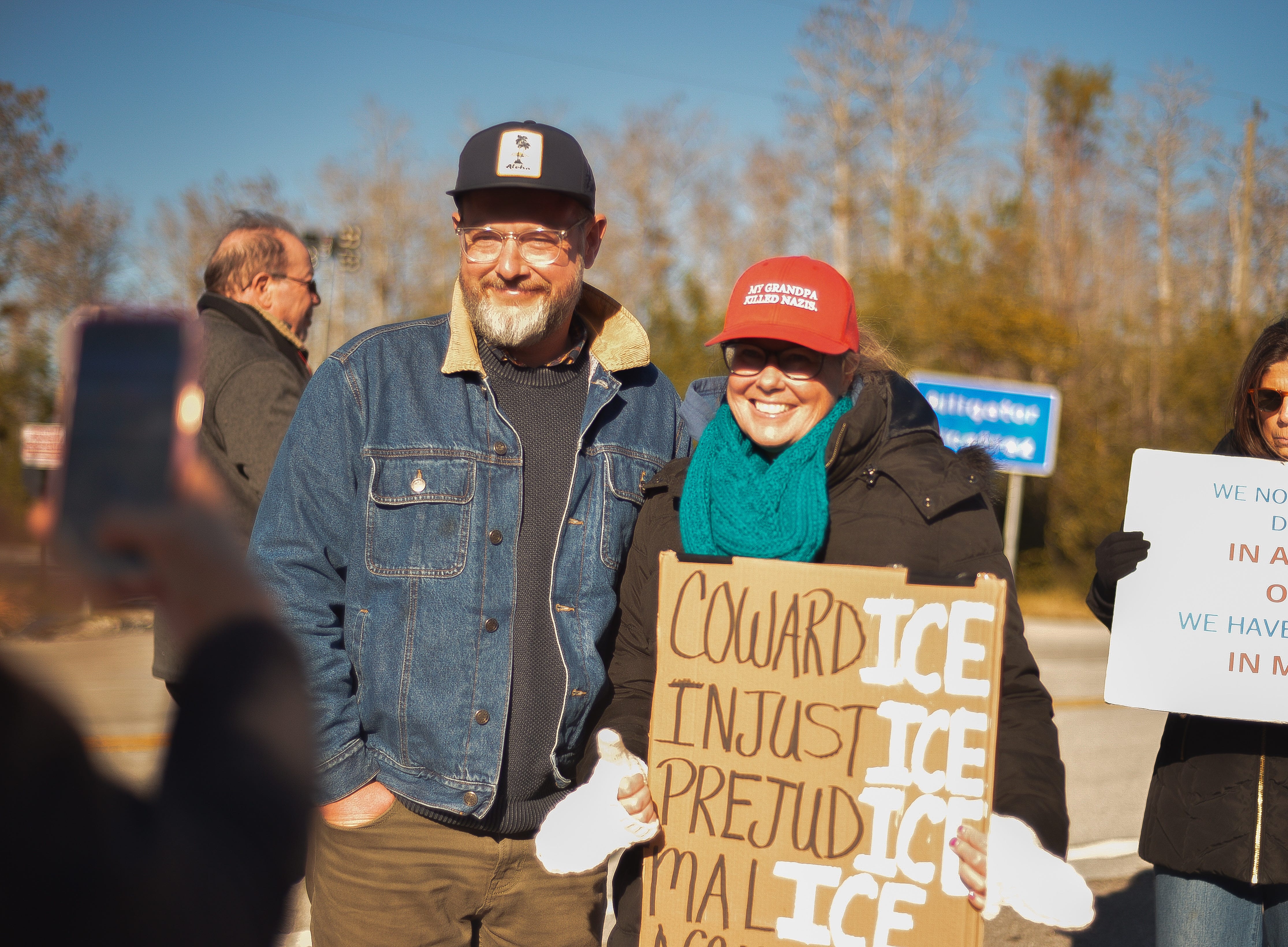
On February 1, 2026, organizers with The Workers Circle held the 27th consecutive weekly vigil outside the Florida-run immigrant detention facility known as “Alligator Alcatraz,” located deep in the Florida Everglades. Since August 2025, community members, faith leaders, and advocates have gathered weekly—often in interfaith prayer vigils—to denounce what they describe as a modern-day concentration camp operating on protected land.
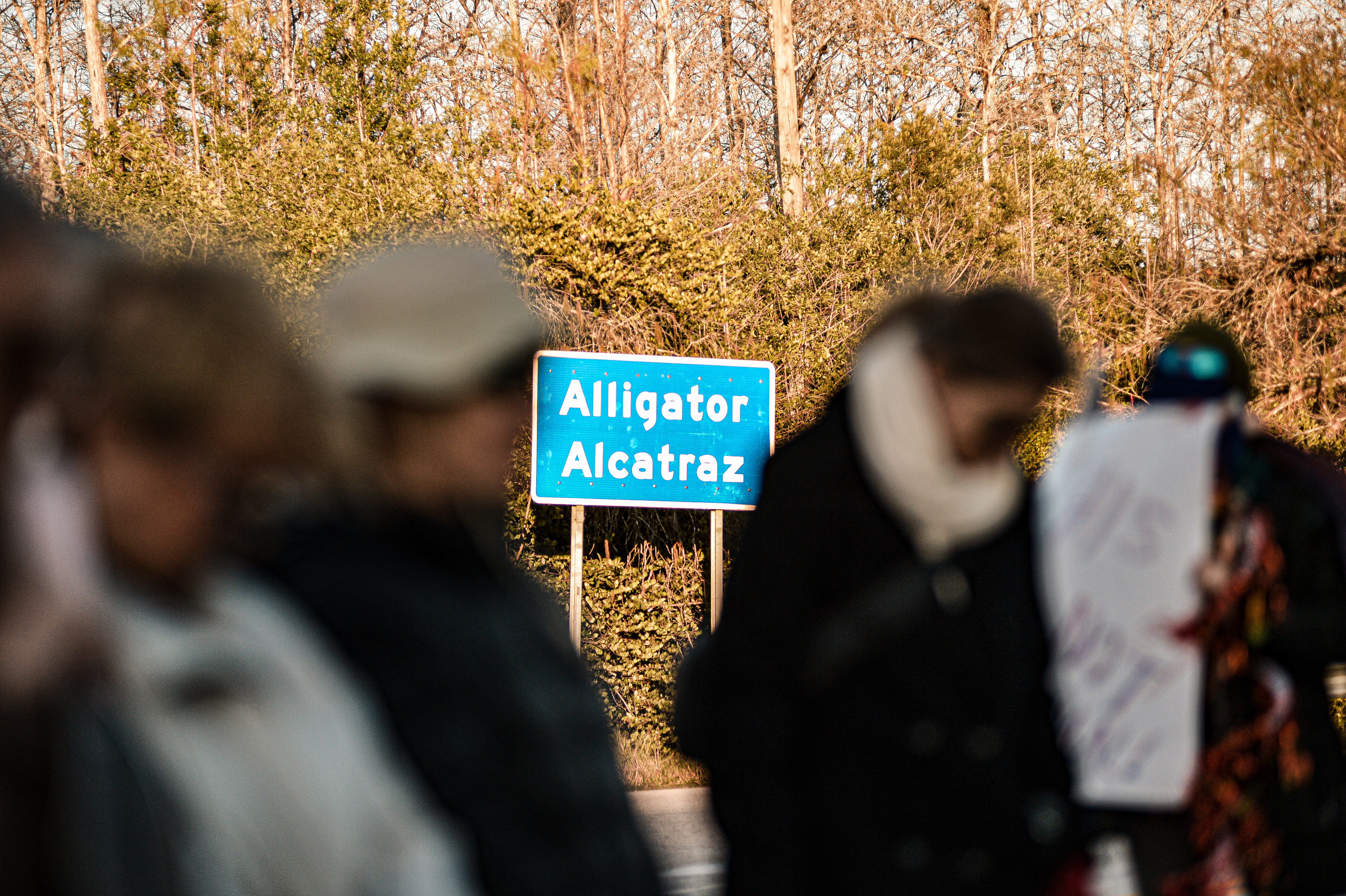
Speakers at the Week 27 vigil cited ongoing reports of inhumane conditions inside the facility. Testimonies from detainees and their families allege people are being held in cages, denied adequate medical care, and subjected to physical abuse. Protesters argue these conditions meet the definition of a concentration camp: the mass detention of people without due process under cruel and degrading conditions.
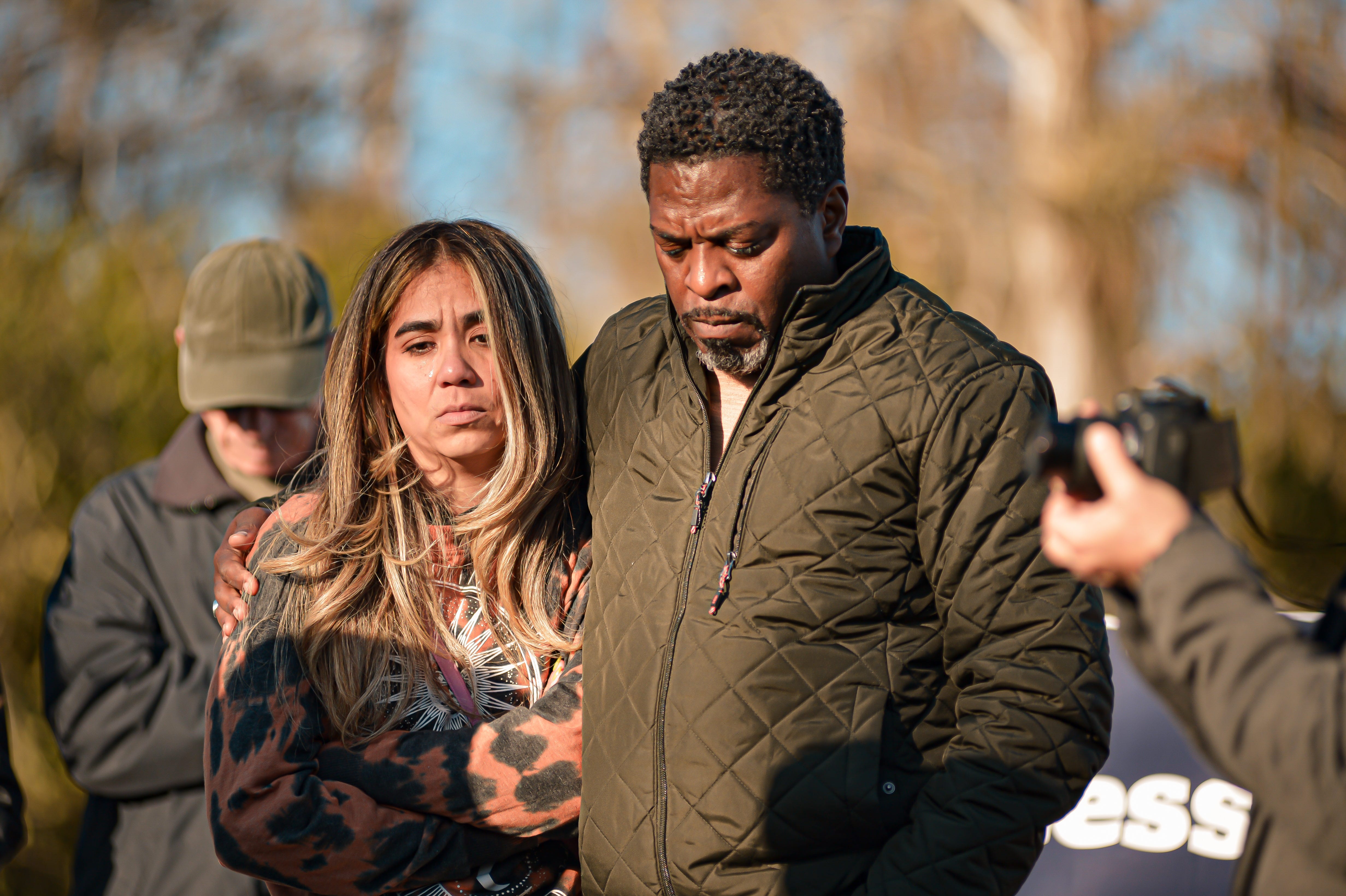
One of the most powerful moments came from Arianne Betancourt, who shared testimony about her father, who is currently imprisoned inside the facility. Her account highlighted the devastating human cost of detention and the trauma experienced by families separated by the state.
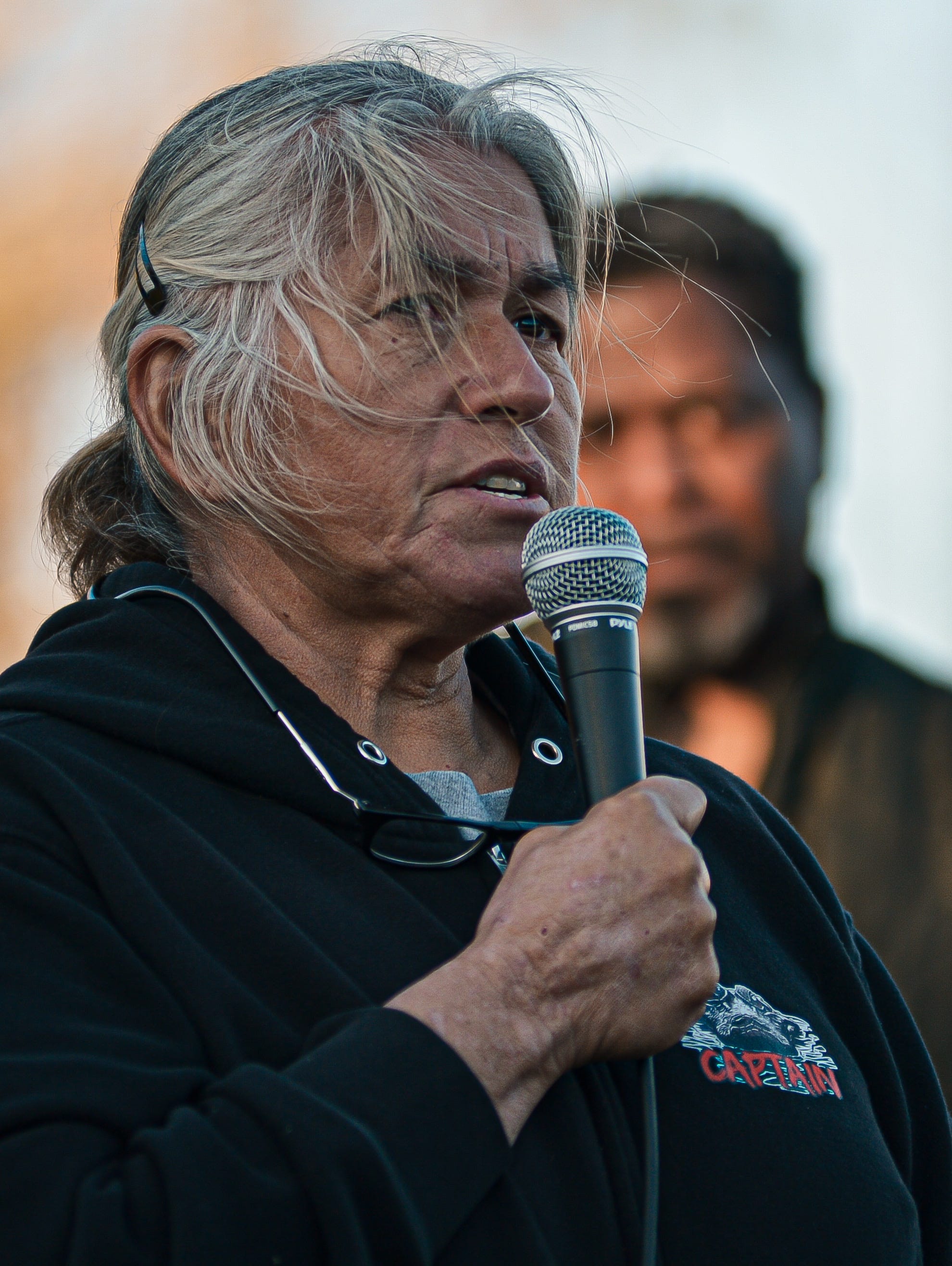
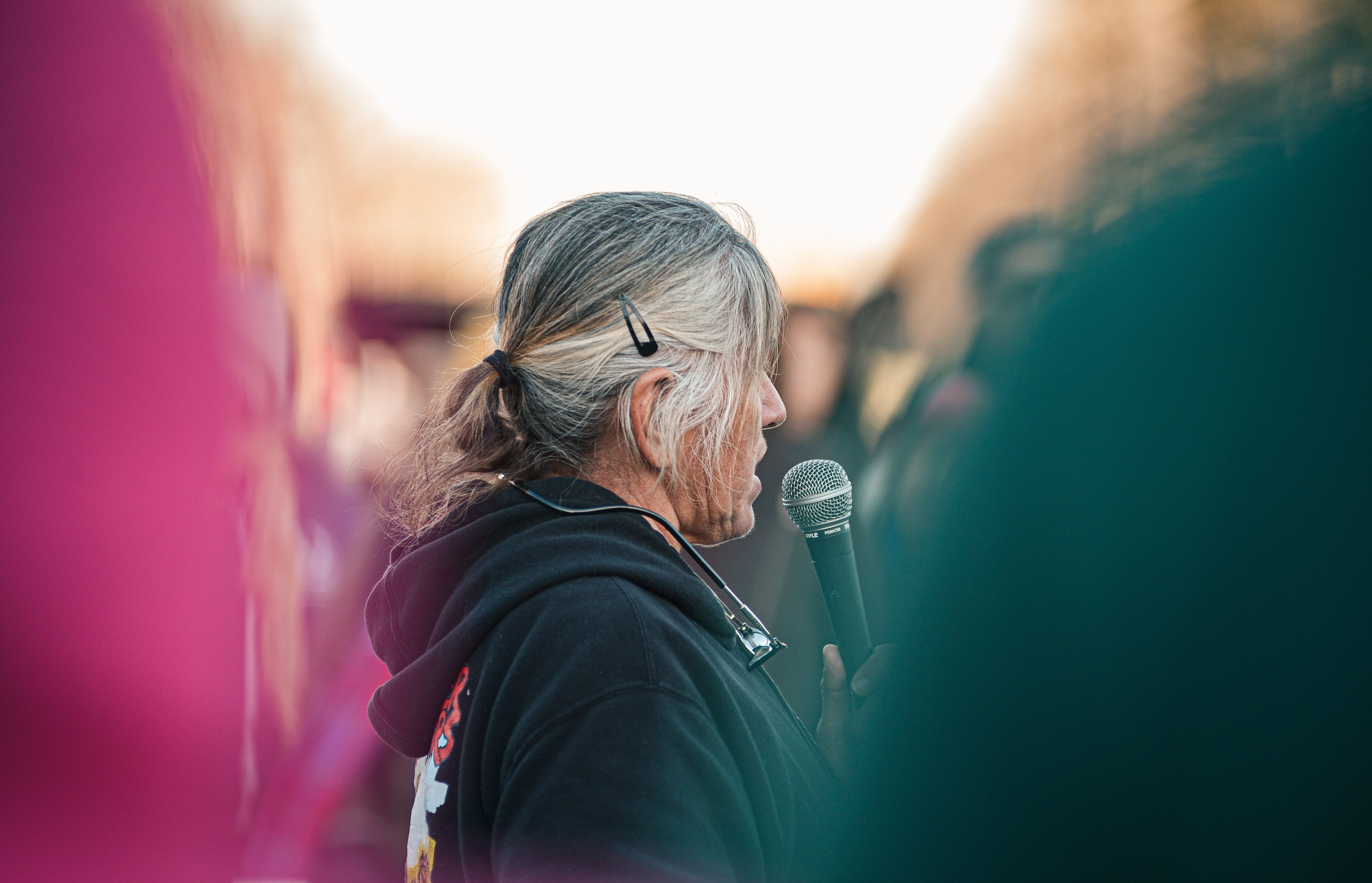
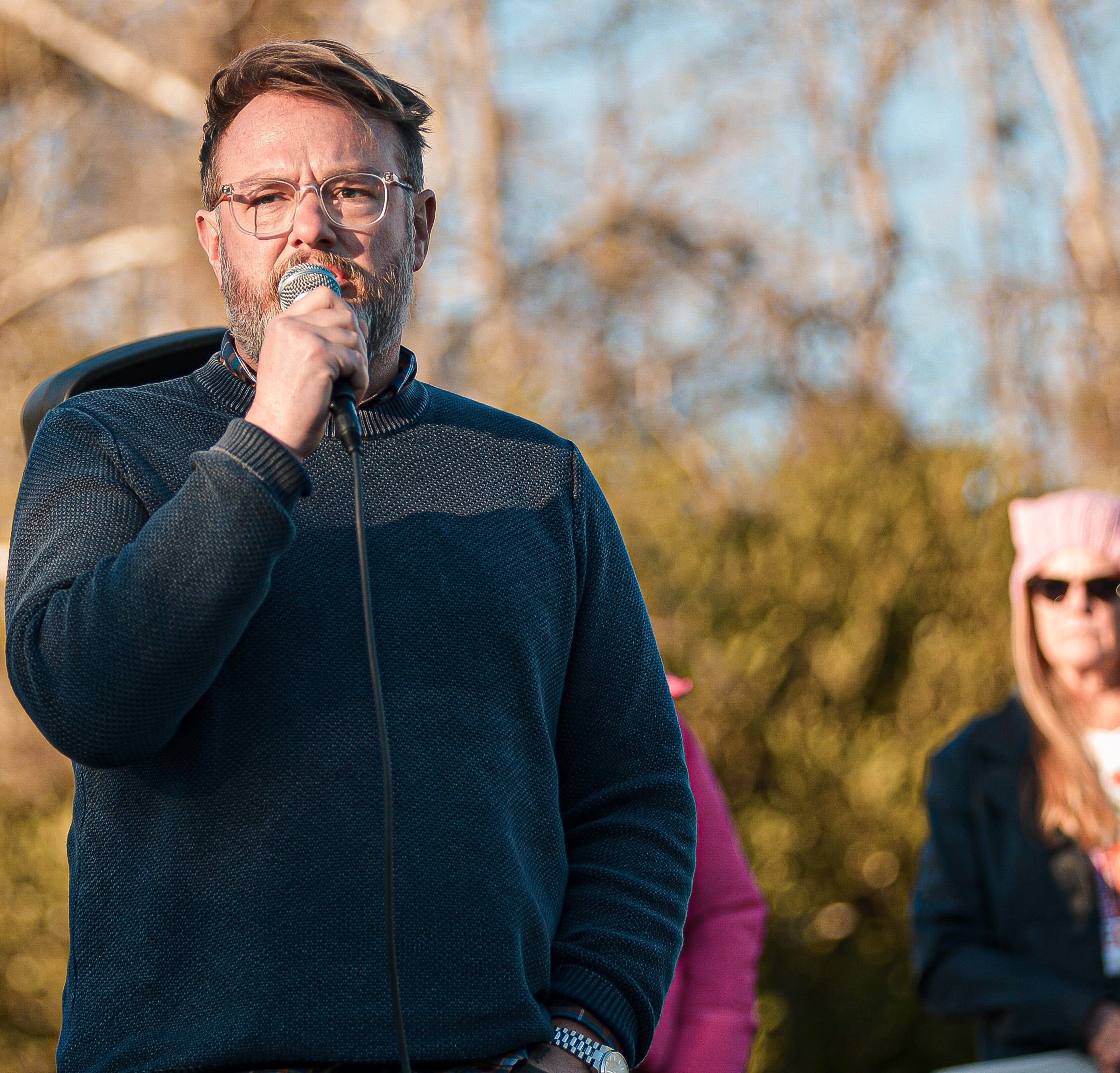
The vigil was joined by Cliff Cash, who stood in solidarity with immigrant communities and amplified calls to shut the site down. Betty Osceola of the Miccosukee Tribe also spoke, connecting the human rights crisis to the ongoing legal fight against the facility’s construction on sacred and environmentally protected Everglades land. The Miccosukee Tribe, alongside environmental organizations, continues to challenge the site in court.
After 27 weeks, organizers say the message remains unchanged: this concentration camp must be closed, detainees must be freed, families reunited, and the Everglades protected. Until then, they vow to keep returning—week after week—bearing witness and demanding justice.



In case you don’t think these MAGA and ICE cumstains on humanity are executing Hitler’s playbook, read this:
Among the limited responsibilities of the SS in prewar Germany were the concentration camps, small stateless zones inside Germany itself. This *precedent of statelessness* was Hitler’s fifth innovation. Himmler established the first camp at Dachau in 1933 as a place where the National Socialist party (as opposed to the German state) could punish people- extralegally, as party leaders deemed necessary. The political enemy and the social enemy were the racial enemy, and the camps were to hold all of these groups. Placing socialists, communists, political dissidents, homosexuals, criminals, and people presented as ‘work-shy’ in the camps separated them from the normal protections of the state, and filtered them from the German national community. Their labor would help prepare Germany for a war that would destroy other states.
The most important aspect of the camps was the precedent they set. The concentration camp system within Germany in the 1930’s was not very expansive… German camps were chiefly important as a demonstration that organs of coercion could be separated by the Fuhrer’s will and barbed wire from the law and state. In this sense the concentration camps were training grounds for the more general SS mission beyond Germany: the destruction of states by racial institutions. (top of page 42)